
PARTE 1: LA HIJA QUE NUNCA QUISO VER
Para entender cómo terminé sentada frente a mi padre en el juzgado mientras intentaba quitarme la casa, hay que comprender qué clase de hombre era. Papá nunca exigió respeto sin más; construyó cuidadosamente una imagen de sí mismo que hacía creer a todos a su alrededor que se lo merecía.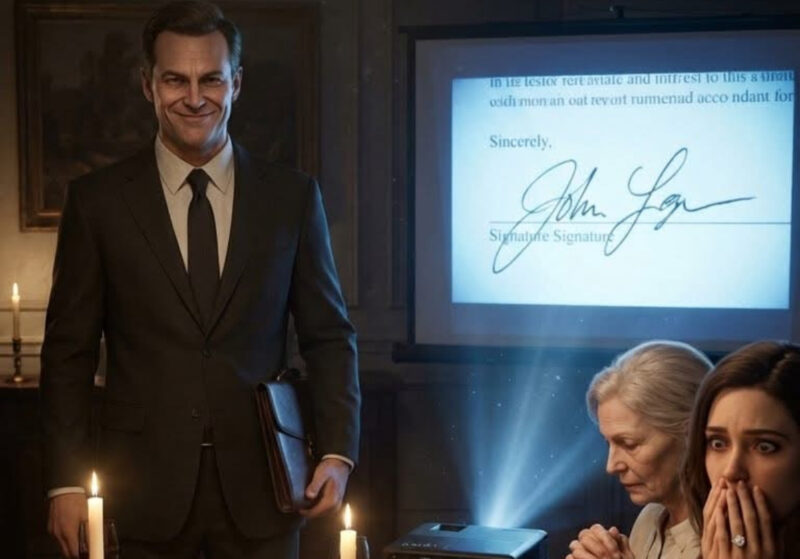
Tras la muerte de mi madre cuando yo tenía nueve años, se reinventó como un viudo heroico que lo había sacrificado todo para criar solo a dos hijas. Familiares, vecinos, feligreses y gente de su club de campo lo admiraban por ello, pero dentro de casa, esa versión de él que tanto elogiaban apenas existía.
Mi hermana mayor, Lauren, se convirtió en la hija que él podía controlar. Era dulce, dependía económicamente de él y estaba dispuesta a sonreír en las cenas, reírse de sus chistes y aceptar cualquier decisión que tomara sin cuestionarla.
Papá la recompensaba constantemente.
Autos, tarjetas de crédito, ropa cara y elogios públicos: todo le resultaba fácil a Lauren. En las reuniones familiares, él alzaba su copa y orgullosamente la llamaba su mayor logro, mientras yo me sentaba cerca fingiendo no darme cuenta.
Conmigo, empleó una estrategia completamente diferente.
Desde pequeña, se esforzó por aislarme de cualquiera que pudiera convertirse en un aliado. Les decía a los parientes que era fría y desagradecida, les contaba a sus amigos que tenía problemas de conducta e incluso convenció a nuestro pastor de que simplemente estaba pasando por una etapa difícil de rebeldía.
Siempre que alguien se preguntaba por qué rara vez asistía a las cenas familiares, papá ya tenía una explicación preparada.
«María prefiere estar sola».
No era cierto, pero funcionaba.
Para cuando era adolescente, había alejado a tanta gente de mi vida que podía estar en una habitación llena de parientes y aun así sentirme completamente invisible. Lauren recibía fiestas de cumpleaños elaboradas y regalos caros, mientras que yo recibía facturas detalladas que mostraban exactamente cuánto decía papá que le debía por comida, pasta de dientes y otros gastos básicos del hogar.
Cuando cumplí dieciséis años y empecé a recoger mesas después de clase, empezó a cobrarme treinta dólares semanales por mi habitación. Anotaba la cantidad en el presupuesto familiar con tinta roja y lo llamaba una lección de responsabilidad, aunque Lauren era mayor, vivía bajo el mismo techo y no pagaba nada.
En Navidad, papá le regaló joyas a Lauren delante de toda la familia. Mi regalo fue un sobre con una fotocopia de mi recibo del supermercado y una breve nota manuscrita.
«Feliz Navidad. Saldo pendiente».
Los logros no cambiaban nada.
Cuando sacaba buenas notas o ganaba un trofeo de atletismo, papá se atribuía el mérito o simplemente lo ignoraba. Mis trofeos desaparecían en los cajones, mis boletines de notas quedaban sin firmar, y cuando conseguí un contrato militar a los dieciocho años, se burló de la decisión en lugar de felicitarme.
Para entonces, ya había convencido a la mayoría de la familia de que me había alistado en el ejército porque no tenía la inteligencia suficiente para triunfar en ningún otro ámbito. En su versión de mi vida, yo no era más que una empleada de bajo nivel que pasaría su carrera contestando teléfonos y vaciando papeleras.
Cuatro años después, me encontraba en la plaza de armas de Fort Benning recibiendo mi nombramiento como subteniente. A mi alrededor, las familias se apresuraban con flores y cámaras, mientras mis compañeros oficiales abrazaban a los padres, que apenas podían contener su orgullo.
Papá llegó tarde, vestido con un costoso traje azul marino, con Lauren a su lado revisando su teléfono. No había venido a celebrar conmigo.
A poca distancia de mis oficiales superiores, papá miró mis botas polvorientas y se rió.
«Se alistó en el ejército porque, en el mundo real, un tonto sin cerebro se moriría de hambre».
Los oficiales a mi alrededor se quedaron en silencio de inmediato.
Podría haberle discutido. Podría haberme defendido delante de todos, pero en lugar de eso, me arrodillé, hice un saludo militar preciso hacia la tribuna y me marché sin mirar atrás.
Esa tarde me enseñó una lección que me acompañaría durante años.
Si alguien insiste en tratarte como a un enemigo, deja de esperar que se comporte como un miembro de la familia.
Y jamás le muestres todas las armas que posees.
PARTE 2: LA HERENCIA QUE CREÍA QUE LE PERTENECÍA
Durante mi primer despliegue, solo una persona de la familia me mantuvo con los pies en la tierra. La abuela, la madre de mi padre, vivía en una gran propiedad en Winston-Salem y había pasado años viendo a su hijo transformarse de un viudo afligido en un hombre que controlaba a la gente mediante el dinero, el aislamiento y el miedo.
A diferencia de todos los demás, ella nunca se creyó la versión idealizada de él. Ignoró sus trajes caros, ignoró mi uniforme y vio quién era yo realmente.
Antes de abordar un C-130 rumbo a una zona de combate activa, recibí un breve mensaje de ella en mi teléfono satelital.
«Estás listo. Regresa».
Y así lo hice.
Después de ese despliegue, completé mi formación jurídica especializada y me uní al Cuerpo de Abogados Militares. Me convertí en abogado militar y más tarde en fiscal militar federal, mientras papá seguía contando historias….que yo no era más que una soldado de bajo rango que contestaba el teléfono.
La abuela entendía la verdad.
Cuando recibí mis nuevas insignias, ella condujo cuatro horas sola para asistir a la ceremonia. Entró en el auditorio apoyada en un bastón de roble y, cuando me colocaron el distintivo de rango en el uniforme, me tomó ambas manos y me miró directamente a los ojos.
—Te veo, Mary.
Catorce meses después, la abuela falleció.
La familia se reunió en el despacho de un abogado en Winston-Salem para la lectura de su testamento. Papá se sentó a la mesa de reuniones consultando su reloj, comportándose ya como un hombre que aguarda unos bienes que, por derecho natural, le pertenecían; mientras tanto, Lauren, vestida de negro, se sentaba a su lado interpretando el papel de nieta desconsolada.
Papá daba por hecho que heredaría el patrimonio por ser el único hijo vivo de la abuela. Para él, los lazos de sangre y el control siempre habían sido sinónimo de propiedad.
El abogado abrió el expediente y leyó las últimas voluntades de la abuela.
Cada acre de la propiedad de Winston-Salem, incluida la casa y los terrenos circundantes, se me había legado exclusivamente a mí.
Papá y Lauren recibieron cantidades modestas de dinero en efectivo.
El testamento era extraordinariamente preciso. La abuela había incluido cláusulas que confirmaban su plena capacidad mental al firmarlo —avaladas por un médico independiente y un inspector gubernamental—, como si hubiera previsto exactamente lo que papá intentaría hacer tras su muerte.
Durante unos instantes, no dijo nada.
Luego levantó lentamente su taza de té, bebió un sorbo y me miró con la misma expresión que había usado durante toda mi infancia, siempre que creía que cualquier resistencia era pasajera.
—Tu abuela siempre tuvo una debilidad absurda cuando empezó a padecer senilidad. ¿Crees que podrás conservarlo, soldadito?
Mantuve las manos apoyadas sobre la mesa y le sostuve la mirada.
—Es una decisión legal. Debe respetarse.
Papá sonrió.
—Ya veremos.
Lo decía en serio.
Tras regresar a mi unidad, fui ascendida de nuevo y llegué a ser fiscal superior especializada en casos complejos de fraude federal. Creía que la distancia y el tiempo convencerían a papá de que luchar por la herencia de la abuela era inútil. En su lugar, contrató a Gerald Foss, un abogado local conocido por su estilo litigioso agresivo.
Presentaron una demanda civil alegando que yo había manipulado a una anciana con problemas cognitivos para que me dejara la propiedad. Su argumento sostenía que había empleado técnicas de interrogatorio militar para aislar a la abuela y presionarla a modificar su plan sucesorio.Then Dad turned Lauren into a witness.
Her entire life depended on his money, including her mortgage, credit cards, and her children’s tuition. He gave her a simple choice: support him or lose everything.
Lauren signed an affidavit claiming that I had prevented the family from visiting Gran during her final years.
That lie became the foundation of Dad’s lawsuit.
But taking the house was only half of his plan.
While the civil case moved forward, anonymous accusations began arriving at my military command.
And suddenly, Gran’s property was no longer the only thing I could lose.
PART 3: THE TRAP HE BUILT AROUND MY CAREER
The anonymous letters reached my base commander with enough detail to force a formal military investigation. Each accused me of elder abuse, financial exploitation, and manipulation of a vulnerable senior citizen, and the language was so specific that the accusations could not simply be ignored.
The consequences came immediately. My security clearance was frozen, my access to active cases disappeared, my computer account was disabled, and the office with my name on the door was locked while my files were reassigned to other prosecutors.
Two military police officers even pulled me out of a classified briefing in front of colleagues I had worked beside for years. Nobody said anything as I left the room, because everyone understood what being escorted out by MPs meant.
The following morning, my base commander placed four anonymous letters on his desk and ordered me to read them. I recognized Dad’s phrasing almost instantly, from the sentence structure to the calculated way every accusation had been framed.
If the civil case succeeded, I would lose Gran’s estate. If the military investigation found even partial credibility in the allegations, I could also lose my rank, security clearance, law license, and the career I had spent years building.
Dad had created a two-front attack.
For weeks, I barely slept while trying to determine what he would do next. Then, three months before the hearing, an invitation arrived for Lauren’s youngest daughter’s birthday party, and I immediately understood that the gathering was not merely social.
Dad wanted to see whether the investigation had broken me.
I went anyway.
The backyard was crowded with relatives, caterers, children, and neighbors while Dad performed the role of the generous grandfather. He laughed loudly, poured expensive wine, and posed beside Lauren as though no legal war existed beyond the party.
I stayed near the edge of the yard and watched.
When everyone moved outside for cake, I slipped into the kitchen and found Dad waiting there alone. The friendly mask disappeared as soon as the door closed behind me.
He moved close enough to force me against the marble counter.
“Has your commander received my letters yet? Sign the paper giving up the house and I’ll withdraw the complaint. If not, I’ll have you court-martialed.”
He smiled.
“Where is a lowly grunt like you going to get the money to fight me?”
For a moment, he wanted me to feel exactly as I had as a child: financially powerless, isolated, and trapped. Then I noticed that his suit jacket sat strangely against his chest, with a rigid rectangular shape pressing beneath the fabric.
He was wearing a recording device.
That changed everything.
Dad had not brought me into the kitchen merely to threaten me. He wanted me to shout, threaten him, or react violently enough that he could present the recording as proof that I was unstable and dangerous.
The entire birthday party was camouflage for an interrogation.
He stood there waiting for me to give him what he wanted.
Instead, I looked directly at him and smiled.
“Thank you for the advice, Mr. White.”
I deliberately did not call him Dad.
For the first time, confusion crossed his face.
I turned away and walked back through the party without giving him another word. That night, I sat in my truck outside my apartment for several minutes, forcing myself to breathe slowly until the anger stopped shaking through me.
Emotion could wait.
I needed discipline.
By the morning of the trial, I had spent three months quietly preparing my answer.
Dad believed he was walking into court against the frightened daughter he had spent decades trying to control.
He still had no idea who I had become.
PART 4: THE FILE THAT CHANGED THE COURTROOM
On the morning of the trial, I arrived at the federal courthouse forty-five minutes early wearing a charcoal suit and carrying a single leather briefcase. Everything I had spent three months assembling was inside, but Dad and Gerald Foss looked at me as though the outcome had already been decided.
Judge Patricia Okafor took the bench at exactly eight o’clock, and Foss immediately began presenting Dad’s case. He introduced medical records showing that Gran had been diagnosed with mild cognitive impairment during the final years of her life, then used those records to describe me as a manipulative granddaughter who had exploited an elderly woman.
His argument relied heavily on language designed to sound frightening in a civilian courtroom. He repeatedly claimed that I had used military interrogation techniques to isolate Gran and pressure her into leaving me the estate.
Then he called Lauren.
My sister walked to the witness stand visibly nervous, with Dad watching her from the plaintiff’s table. She had been financially dependent on him for years, and every part of her life, including her mortgage, credit cards, and children’s tuition, still depended on his support.
“She isolated Gran. She told me that if I visited, she would use her military connections to ruin my husband’s business.”
I listened without reacting.
When Lauren finished, Dad leaned back and smiled at me because he believed the medical records and her testimony had created exactly the picture he wanted. He had spent years telling people I was dangerous, ungrateful, and unstable, and now he expected a judge to accept the same version.
When it was my turn, I opened my briefcase and submitted a bound set of encrypted satellite communication records retrieved from Department of Defense archives. Every entry carried verified timestamps, military encryption markers, and deployment records confirming exactly where I had been when each communication occurred.
I explained that the logs documented four years of consistent contact with Gran, including calls, encrypted messages, and welfare checks routed through military channels. Instead of proving that I had isolated her, the records showed that I had been the family member who stayed in contact even while deployed overseas.
Judge Okafor began reading.
Dad’s confidence disappeared.
He suddenly slammed both hands against the table and stood, accusing me of forging the records. He claimed that I was nothing more than a low-ranking soldier who had somehow stolen military seals to create fake evidence.